Data Visualization
This project was conducted for the coursework where our team investigated how fluctuations in airfare influence real-world travel demand during the spring and summer months, periods when price sensitivity and leisure travel collide. Using visual analytics, we explored whether rising ticket prices actually reduce how many seats get filled, or whether seasonal travel behavior overrides standard economic expectations. By transforming raw airline and seating data into visual patterns, this project reveals how price, seasonality, and human behavior intersect to shape the flow of air travel.
My Role
Data Analyst
Collaborators
4 Team Members:
Helen Yang, Ryan Paquia, Vanessa Hinds, Yiyi Huang
Date
Sep 2023 - Dec 2023
Introduction
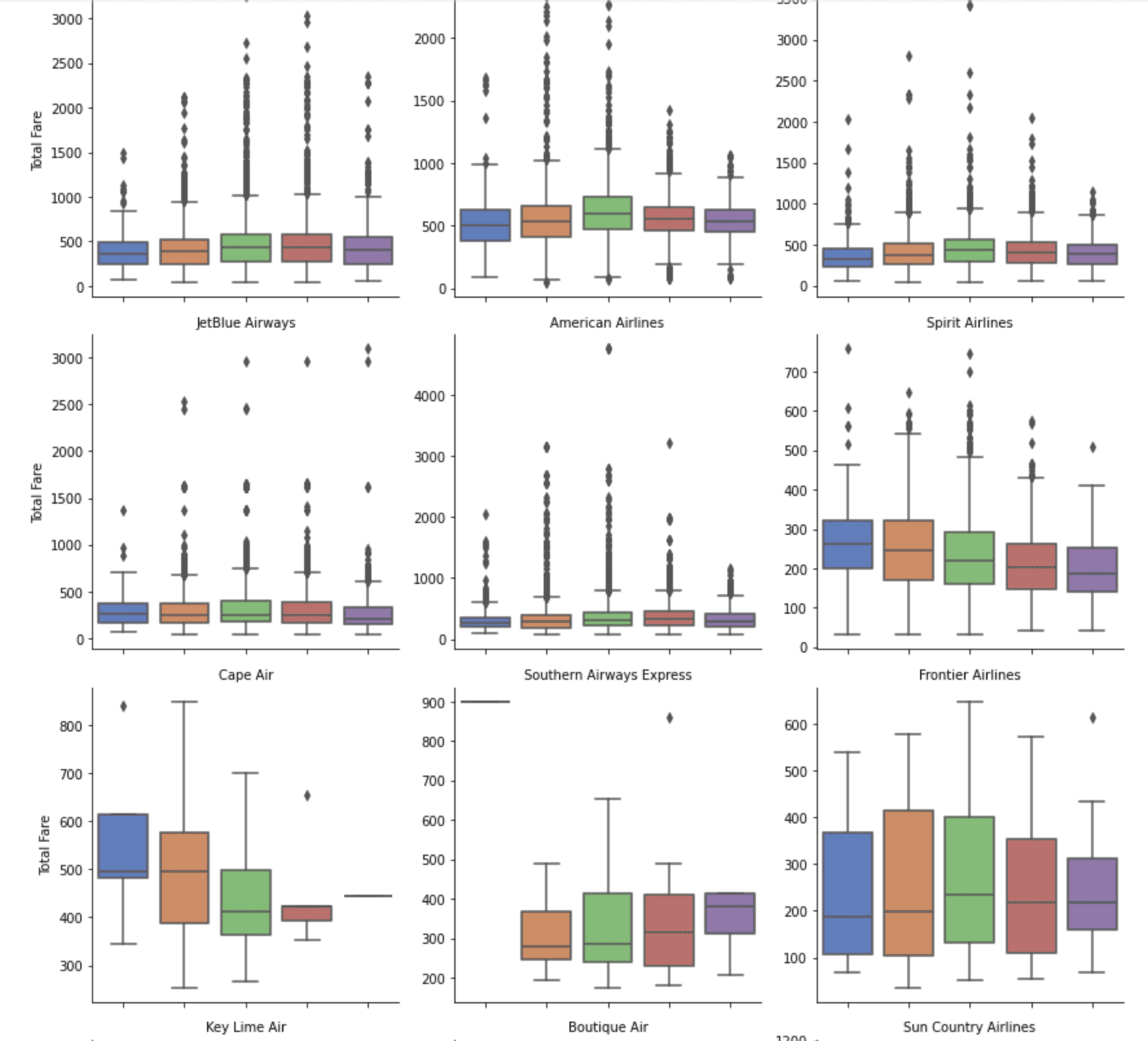
Monthly trend by airlines
Data Analysis
We combined two key datasets that were collected through massive crawling, which are the average ticket prices across U.S. domestic routes and the aircraft seating capacity plus actual seats filled (seated rate).
After cleaning and merging, we focused on March through August, capturing both the spring shoulder season and peak summer travel. Rather than forcing a model immediately, we began with visual exploration, treating data visualization as a thinking framework.
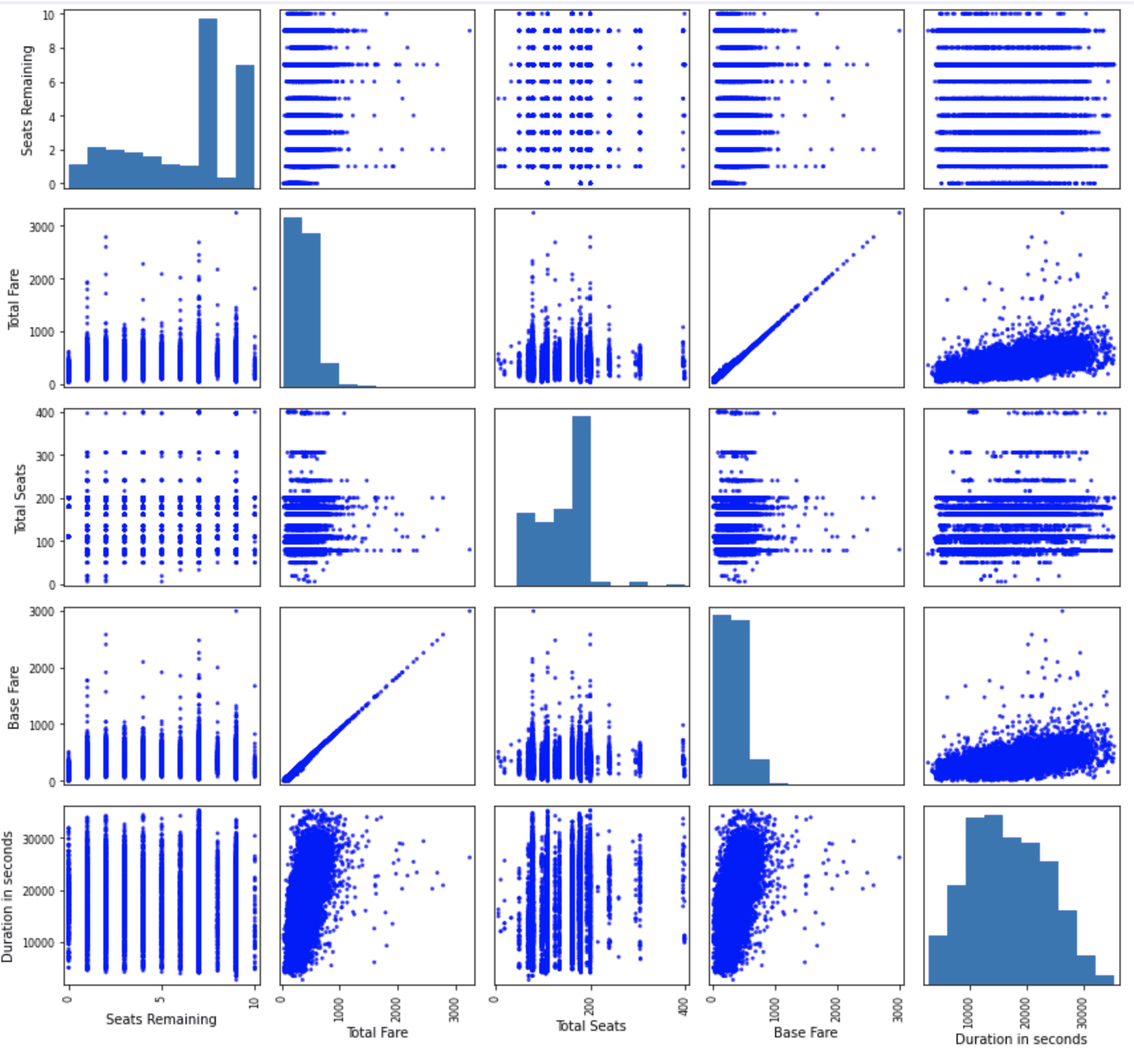
Scatter matrix of flight data
Through multiple data visualizations such as line chart for seasonal aircraft trends and for seasonal seated rate trends, we have discovered that during peak seasons, the usual “higher price → lower demand” expectation breaks down. This was one of the clearest behavioral patterns in the dataset.
After exploring visual patterns, we introduced a simple predictive model to test: Can we estimate seated rates using airfare and seasonal indicators?
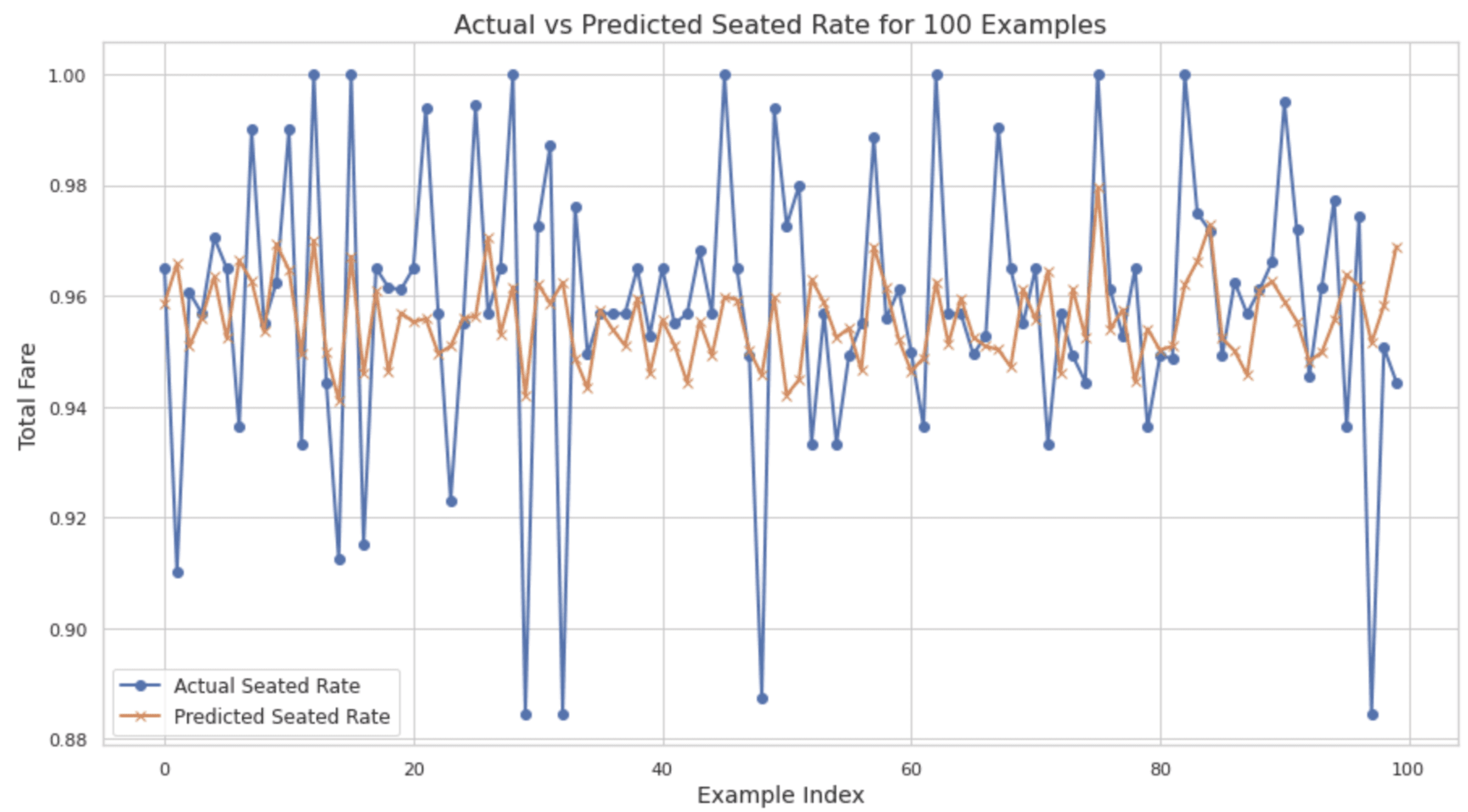
The model roughly follows the actual seated rate curve, but It diverges at certain points, misses route-specific or event-driven anomalies, and underestimates the role of one-off travel motivations.This reinforced an important insight that airfare alone cannot fully explain travel volume and how context matters.
Thus, we have gained some key insights as following:
1. Price does influence demand but mildly.
Most travelers respond to price, but not strongly enough to create steep changes in occupancy.
2. Seasonality overrides elasticity.
In summer, people fly even when fares are high. A trip that “must happen”—family travel, weddings, holidays—outweighs cost considerations.
3. Human behavior is more complex than economic theory.
Demand is shaped by:
personal schedules
cultural patterns
family obligations
seasonal expectations
…the data simply makes these invisible factors visible.
4. Visualization makes complexity intuitive.
Without charts, these patterns would have remained hidden in thousands of rows of numbers.
Conclusion
This project taught me that data visualization is about revealing the underlying logic of human behavior. I learned how to contextualize numerical patterns within real-world motivations, and to construct visual storytelling that explains complex data.
Most importantly, it showed me how data and design intersect: good visualization doesn’t just display information; it transforms understanding.
For more details, please email me at janetteylim@gmail.com.